TNO
TNO is the Dutch Organization for Applied Scientific Research and is The Netherlands’ largest knowledge organization, with approximately 5000 employees, servicing companies, government bodies and public organizations. TNO-STIP (Sustainable Technologies for Industrial Processes) is part of the business unit
Energy Transition (ET) and until 2019 was part of the Energy research Centre of the Netherlands (ECN), which then merged with TNO. The group focuses on developing and scaling up technologies for a sustainable process industry. A range of experimental and analytical facilities is available for lab and pilot-scale research & technology development. Substantial experience exists in process modelling and integral plant design including economics evaluation. ET has a long and proven track record in the design, process and mechanical engineering, and construction of lab-scale and pilot-scale test rigs and is experienced in scaling-up and scaling-out processes from lab to industrial scale, as demonstrated in many EU and nationally funded projects.
One of the objectives of TNO-STIP is to develop innovative solutions for the reduction of energy and raw-materials use in industry together with our industrial partners. Since 1998, nanoporous membranes have been developed for gas separation, pervaporation and nanofiltration applications. Over the years, the ‘membrane technology professionals’ as part of the sustainable process technology group has obtained an outstanding reputation and solid intellectual property (IP) position. The group has scaled up the sol-gel membrane technology. It was among the first to show the productivity of silica and silica based membranes on one meter long tubes.
For more information on the expertise of TNO please visit the TNO website. More information on TNO’s hydrogen separation membrane technology can also be found on: www.hysep.com.
Twente University, MESA+ institute
The University of Twente offers research and degree programmes in technology, and in the social and behavioural sciences. MESA+ Institute for Nanotechnology is part of the University of Twente. The institute employs 500 people of which 275 are PhD students or postdoctoral researchers. With its NanoLab facilities the institute holds 1250 m2 of clean room space and state of the art research equipment. MESA+ has an integral turnover of 45 million euro per year of which 60% is acquired in competition from external sources.
MESA+ combines the disciplines of physics, electrical engineering, chemistry and mathematics, and encompasses multidisciplinary competences in the areas of microsystem technology, materials science, bottom-up chemistry, photonics and biophysical engineering. The institute aims to carry out excellent and relevant research in the field of nanotechnology, and post-graduate education. The institute also aims to promote the transfer of knowledge to society and new technology, and has been the breeding place for more than 40 high-tech start-ups to date.
For more information please visit www.mesaplus.utwente.nl.
How it started
The development of the HybSi® membrane system started as a result of a discussion during the 12th International Sol-Gel Workshop in Sydney, Australia, August 2003. In a small group, Andre ten Elshof and Jaap Vente discussed the issues related to the hydrothermal stability of nanoporous silica based materials and possible ways of how to prolong the longevity of the membrane material. The most reasonable idea was to replace as many Si-O-Si bonds as possible by Si-CnHm-Si bonds. Back at the University of Twente, Ph.D. student Ashima Sah started to work on this topic, supervised by Andre ten Elshof and in collaboration with post-doc Hessel Castricum. After two years and many setbacks, indeed a membrane was formed that was somewhat selective. The recipe was quickly scaled-up to a tubular geometry and put to test at high temperatures at Energy research Centre of the Netherlands (ECN). Despite some performance decline during the first month of operation, it survived for more than two years of continuous testing in dehydration pervaporation at 150 °C. The performance and stability has been further improved and is much superior over any other pervaporation membrane known to date. Therefore, the application window is much broader. Gradually the use of the membranes in for process improvement of separation processes did get increased attention. Activities around the membrane processes are combined with advanced material development, testing and implementation. In the end, the implementation of this membrane in the (process) industry will lead to larger improvements in energy efficiency and in lower costs.
Key people

Yvonne van Delft, Process Efficiency & Flexibility Sub Proposition Lead
Yvonne van Delft has a BSc degree in Chemical Engineering. Subsequently, she moved to Twente University to study Chemical Engineering and obtained her masters degree. Yvonne was product developer at Sekisui Alveo from 1995-1997 and after this joined ECN in 1997, first as engineer in construction of prototypes and later as researcher and project manager membrane technology. From 2010-mid 2014 Yvonne was senior manager Sustainable Process Technology and since mid-2014 she is Innovation manager Liquid Separation & Conversion. Currently Yvonne is a senior project manager Separation technologies.

Henk van Veen, senior scientist and project manager Membrane Technology (retired)
Henk van Veen obtained a BSc degree in Chemical Engineering in 1986. His graduation work in the field of polymeric membranes for the separation of CO2 from CH4 was performed in the Membrane Technology group at Twente University. Subsequently, he started to work at the Energy research Centre of the Netherlands in the field of ceramic membranes. Besides managing several projects he became responsible for the coordination of all activities in the field of membrane applications and process development within ECN in 2000. Since 2007 Henk is senior scientist and project manager Membrane Technology. The work focuses towards energy and costs savings using membranes and separation technology, including the use of membranes in (bio) refining and conversion processes. In December 2020 Henk retired.

Hessel Castricum, senior scientist Inorganic Materials for Sustainable Technology
Hessel Castricum obtained his master’s degree cum laude (highest honours) in the field of experimental nuclear and high-energy physics at the University of Amsterdam, studying Baryon resonances with an aerogel Cerenkov detector. Subsequently, he investigated mechanically disordered materials and developed mechanochemical synthesis routes for catalysts at the Dutch Foundation for Fundamental Research on Matter. After obtaining his doctorate degree in 2001 he has worked at the University of Amsterdam and the University of Twente on porous materials, with as main research interests heterogeneous catalysts, catalytic soot filters, inorganic membranes and membrane supports. His work on hybrid materials has resulted in the development of HybSi® membranes. Current activities encompass the design and development of new classes of hybrid materials for sustainable technology.
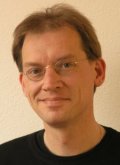
Andre ten Elshof, associate professor of Inorganic Materials Science
Andre ten Elshof studied chemical engineering with specialization chemical physics at the University of Twente. After obtaining his PhD degree in inorganic materials science, he worked as research chemist and group leader at Akzo Nobel Coatings in Sassenheim. He joined the Inorganic Materials Science group of the MESA+ Institute for Nanotechnology at the University of Twente in 2000, where he currently holds a position as associate professor. His research focuses on the development and characterization of nanostructured functional metal oxides and composite materials, with emphasis on thin films, porous oxides, micropatterns and low-dimensional nanostructures via chemical synthesis.